Sep 18, 2026
)
 admin
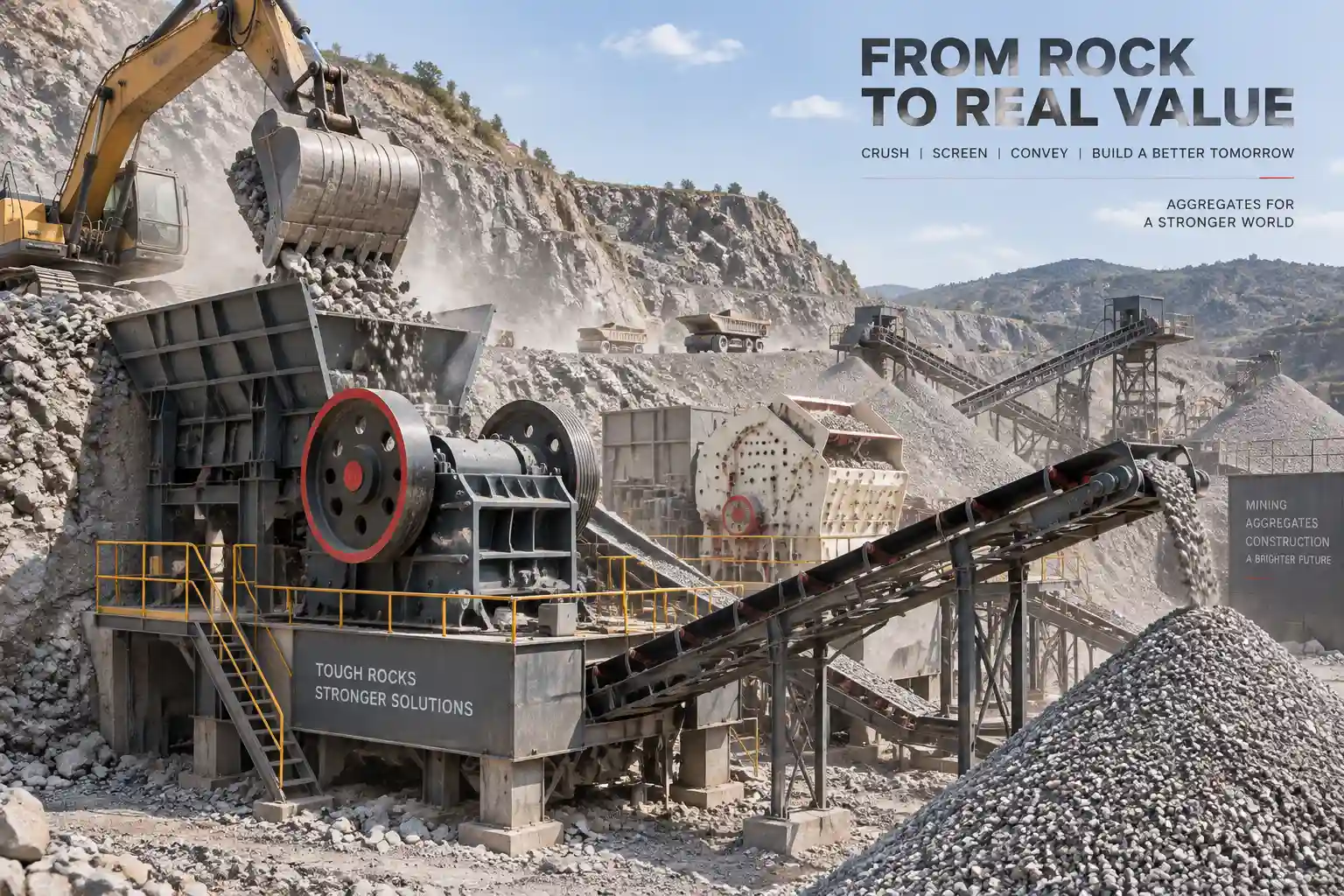
admin Crushing machinery uses controlled mechanical force to reduce rock, ore, concrete, minerals, and other bulk feed to a target size and shape. The crusher sits in the middle of the process.
Production depends on the feeder, screen, conveyors, wear parts, and controls. The required output gives those components a common direction.
The term can describe one crusher or a complete line. Inside the machine, a chamber, gap, or impact surface applies compression, impact, attrition, or shear. Feed size and discharge size define the reduction ratio.
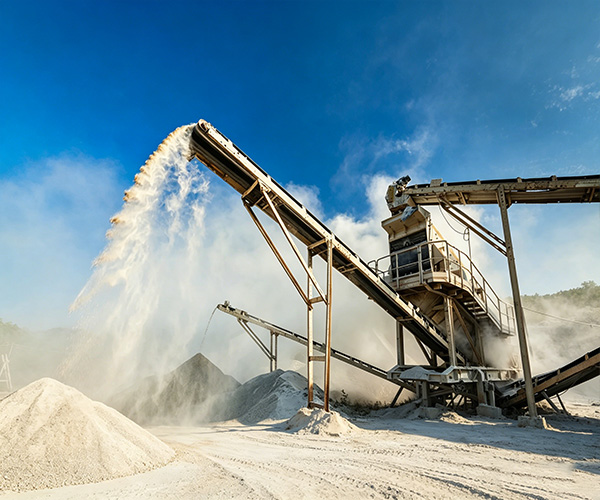
A working line may include a feeder, primary crusher, vibrating screen, later-stage crusher, conveyors, dust control, stockpiles, and an oversize return route. Each one changes the flow in a specific way.
Crushing produces pieces that screens and conveyors can handle. Grinding follows when the process needs much finer particles or powder. Shredding uses cutting and tearing actions for
other materials.These categories should be settled before an enquiry is priced.
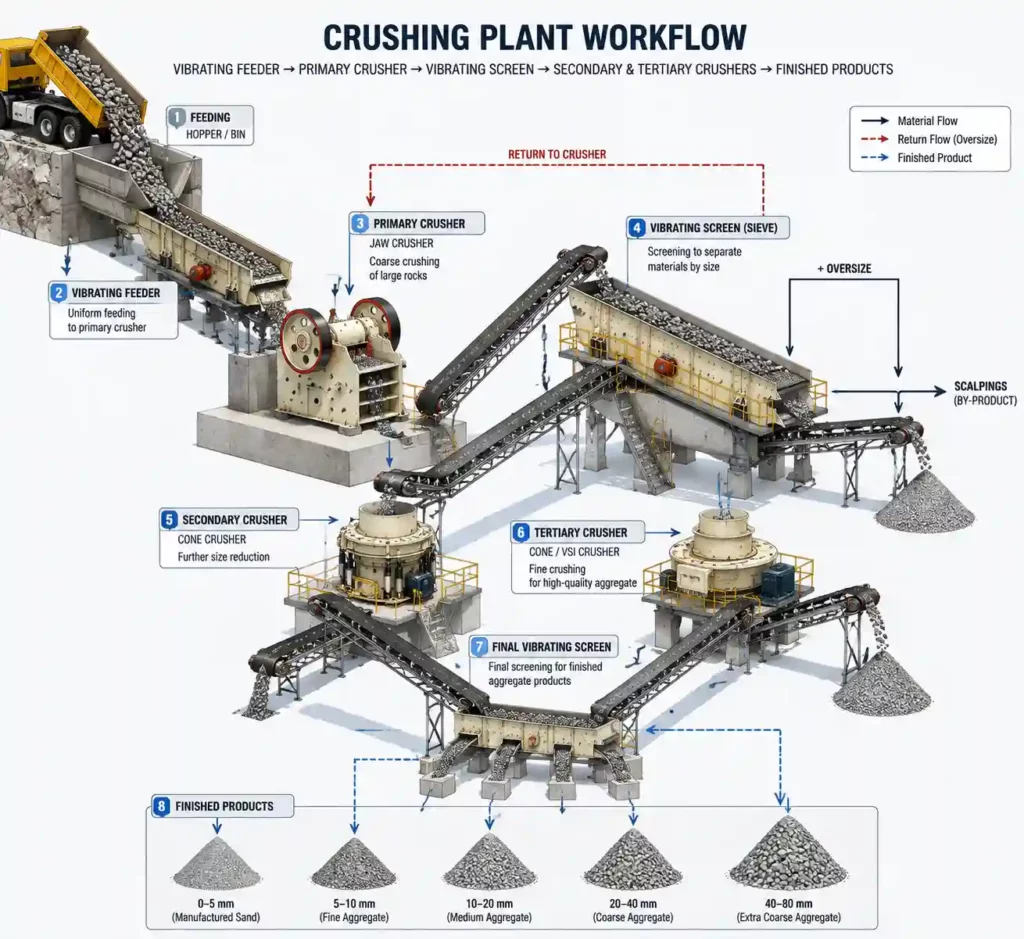
A feeder meters raw material into the primary crusher. The chamber applies force until fragments fit through the discharge opening. The resulting stream reaches a screen.
Finished fractions leave for stockpiling or the next process. Oversize stays in circulation.
Some plants repeat the sequence. Primary crushing accepts the largest feed. Secondary and tertiary stages take the material toward the target size or shape. Feed, target product, and reduction ratio set the stage count.
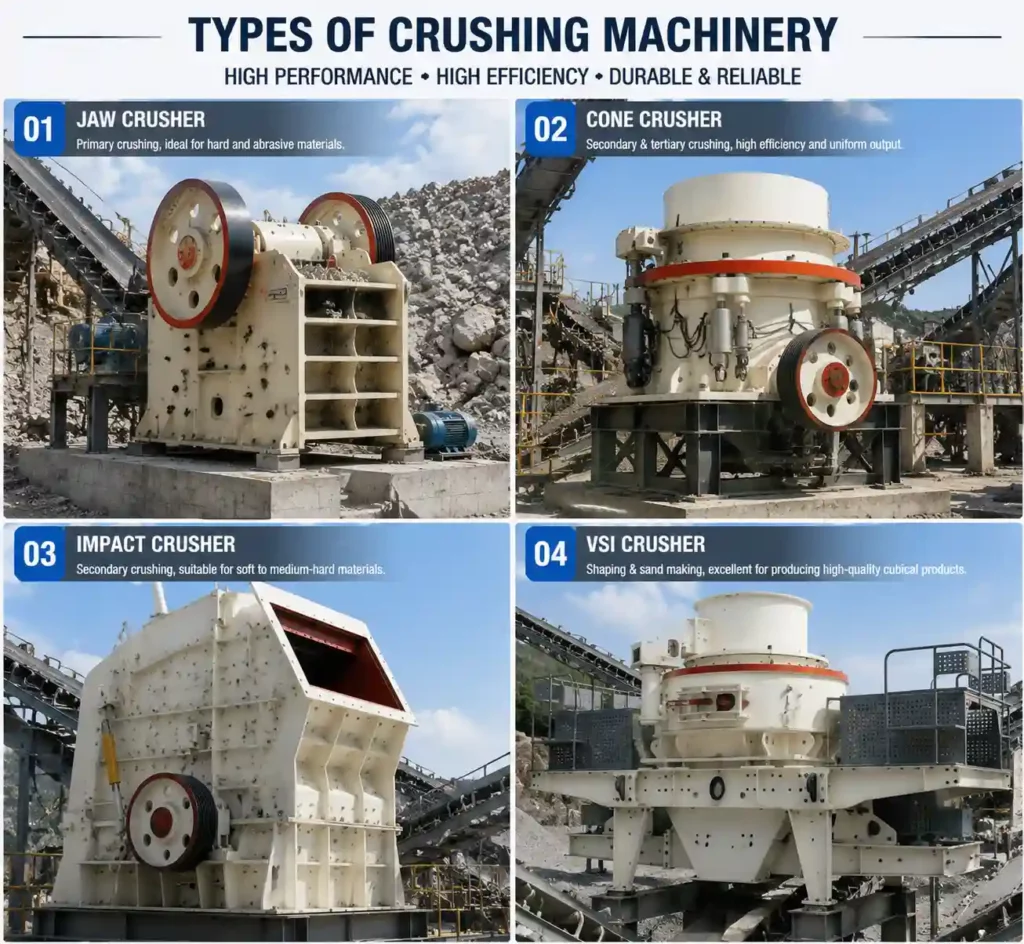
Machine action changes the result. Jaw and gyratory crushers work mainly through compression; cone crushers add a rolling motion between the mantle and bowl liner. Impact and hammer machines work at rotor speed. Roll crushers use a defined gap. Vertical-shaft impact equipment often shapes manufactured sand.
An uneven feeder can overload the chamber. Screen openings control recirculation. Conveyor capacity and transfer points set the rate that the crusher can sustain.
The feeder, screen, conveyor, and crusher need the same feed and output basis, because a change at one point alters the load arriving at the next component.
The type name tells you how the machine breaks material. Feed condition and stage decide where that action belongs.
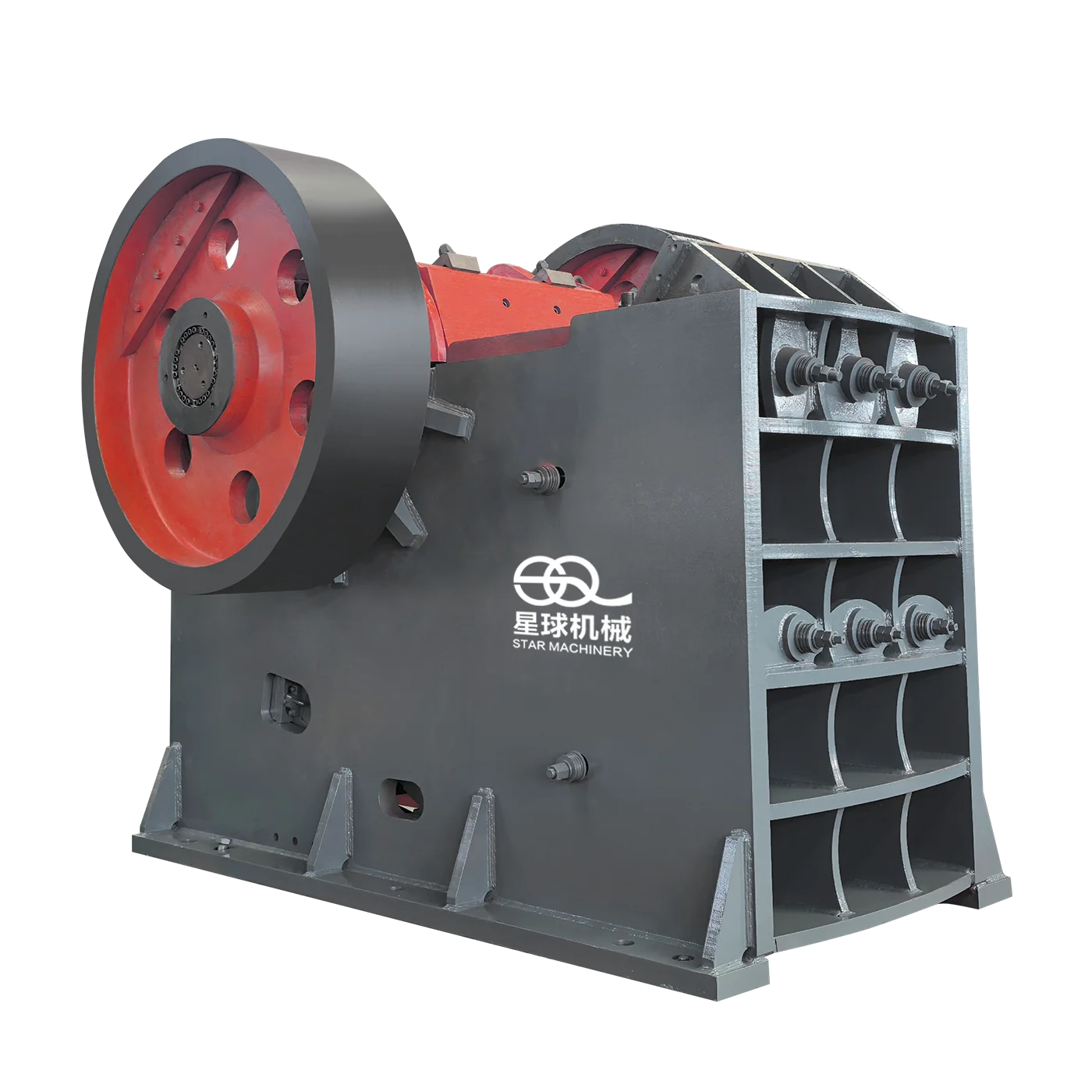
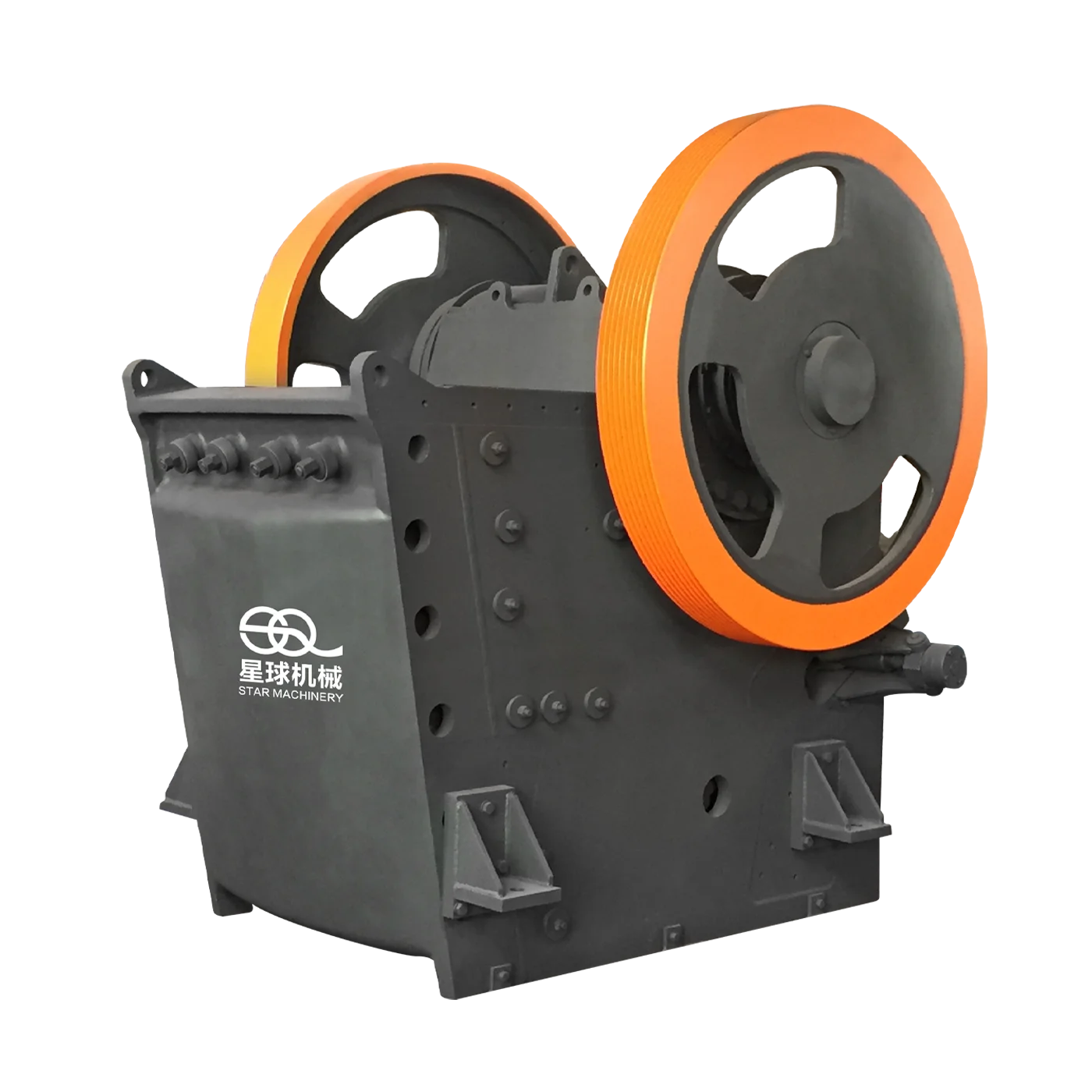
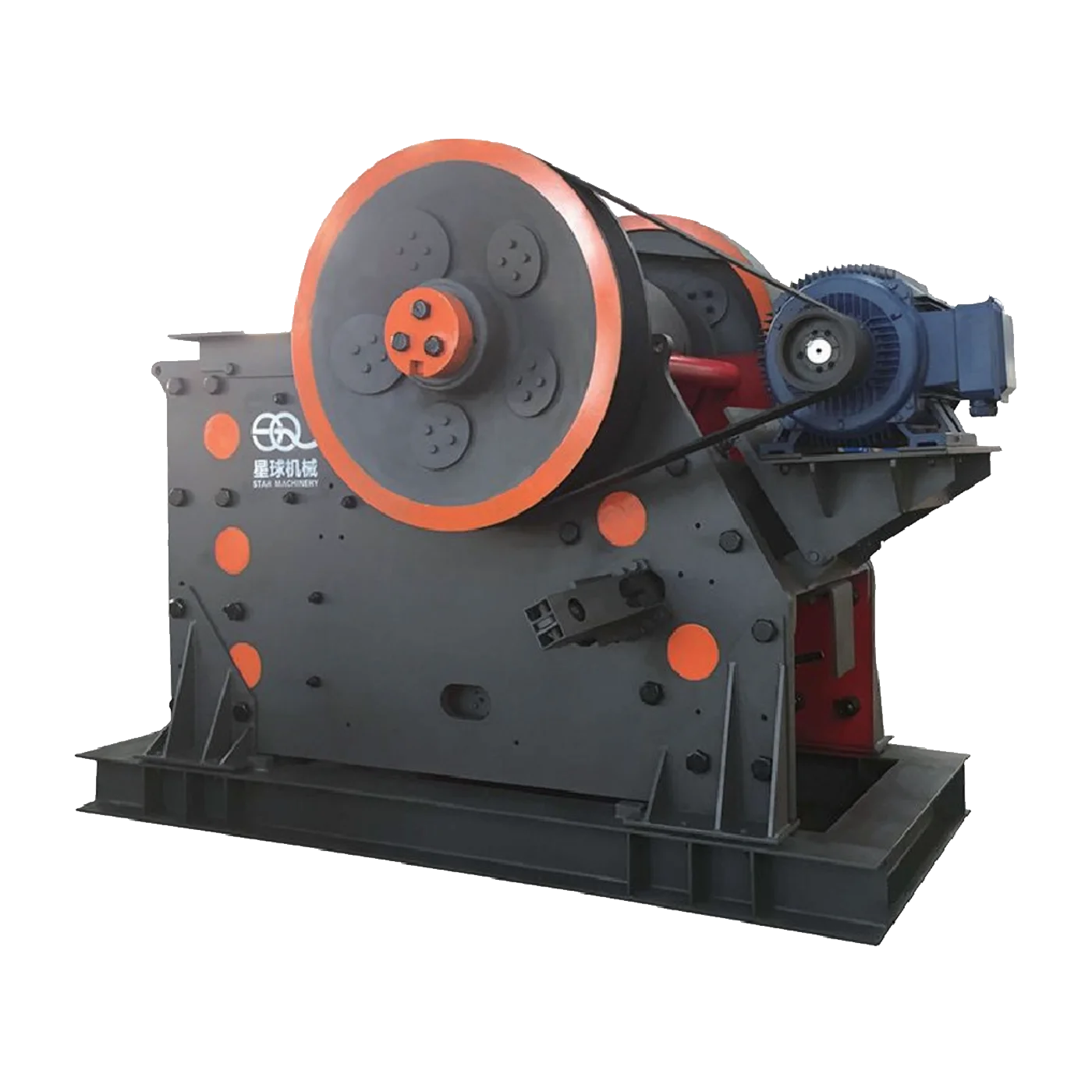
A jaw crusher compresses large feed between fixed and moving jaws. Its opening suits primary work with hard rock, ore, concrete, and demolition material.
Maximum lump size sets the boundary. Then come jaw plates, toggle protection, and access for maintenance.
A gyratory crusher moves a mantle inside a concave shell. Continuous compression supports high-volume primary duty in large mining plants. Foundation, lifting, lubrication, and liner access belong in the site design from the start.
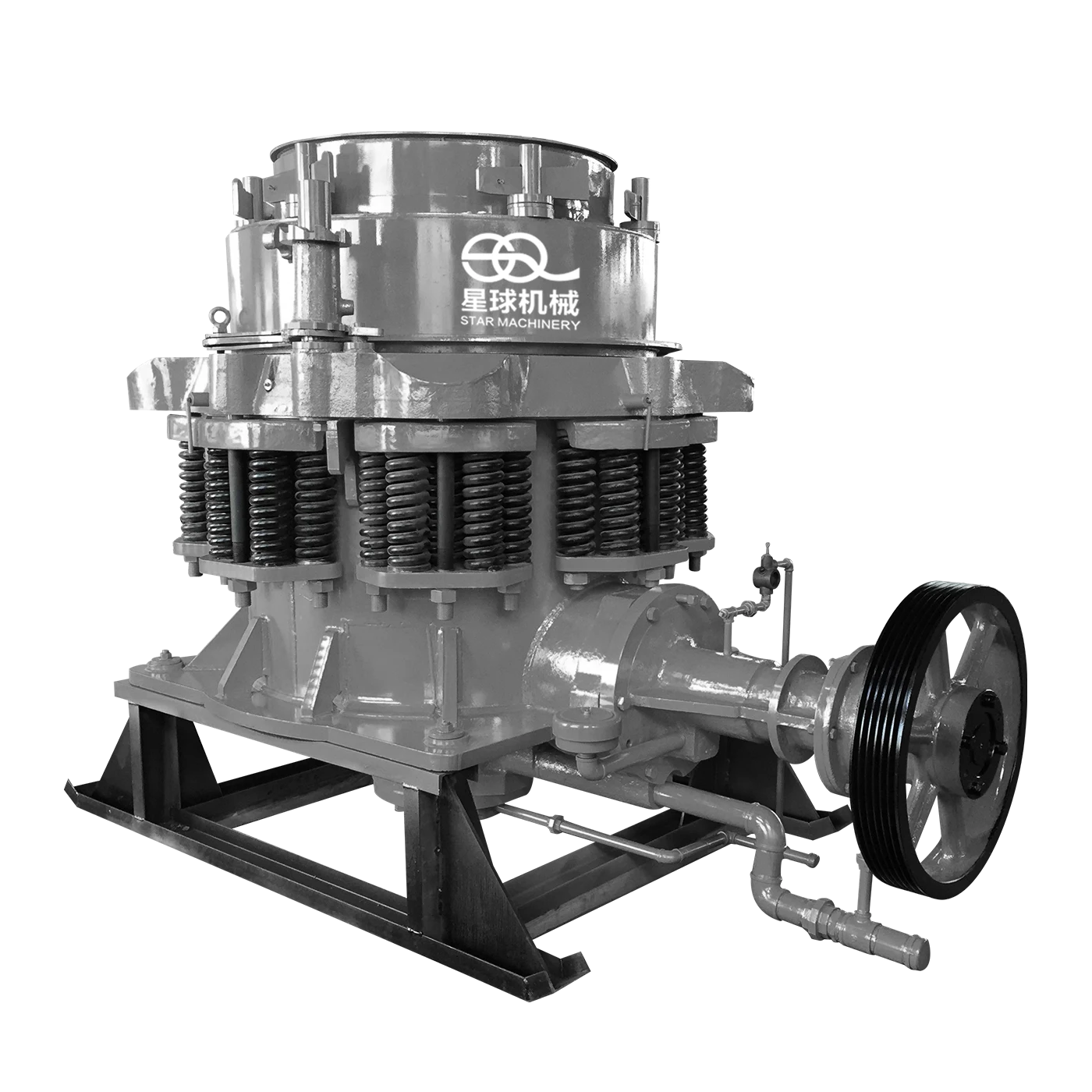
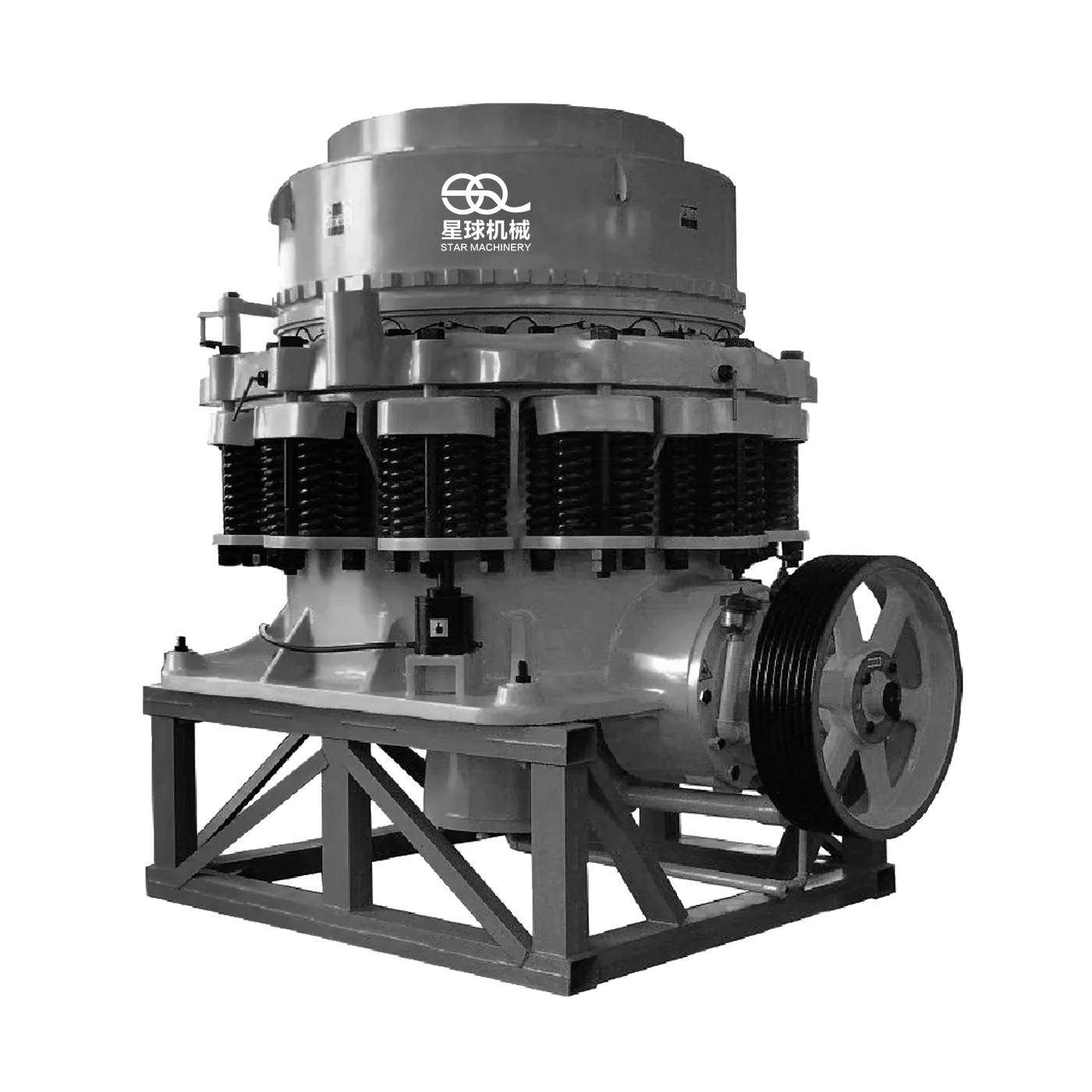
Cone crushers work mainly in secondary and tertiary stages. The mantle and bowl liner compress medium-hard or abrasive feed. Closed-side setting and cavity profile shape the product curve. Liner wear moves that curve over time.
Adjustment practice needs a clear owner.
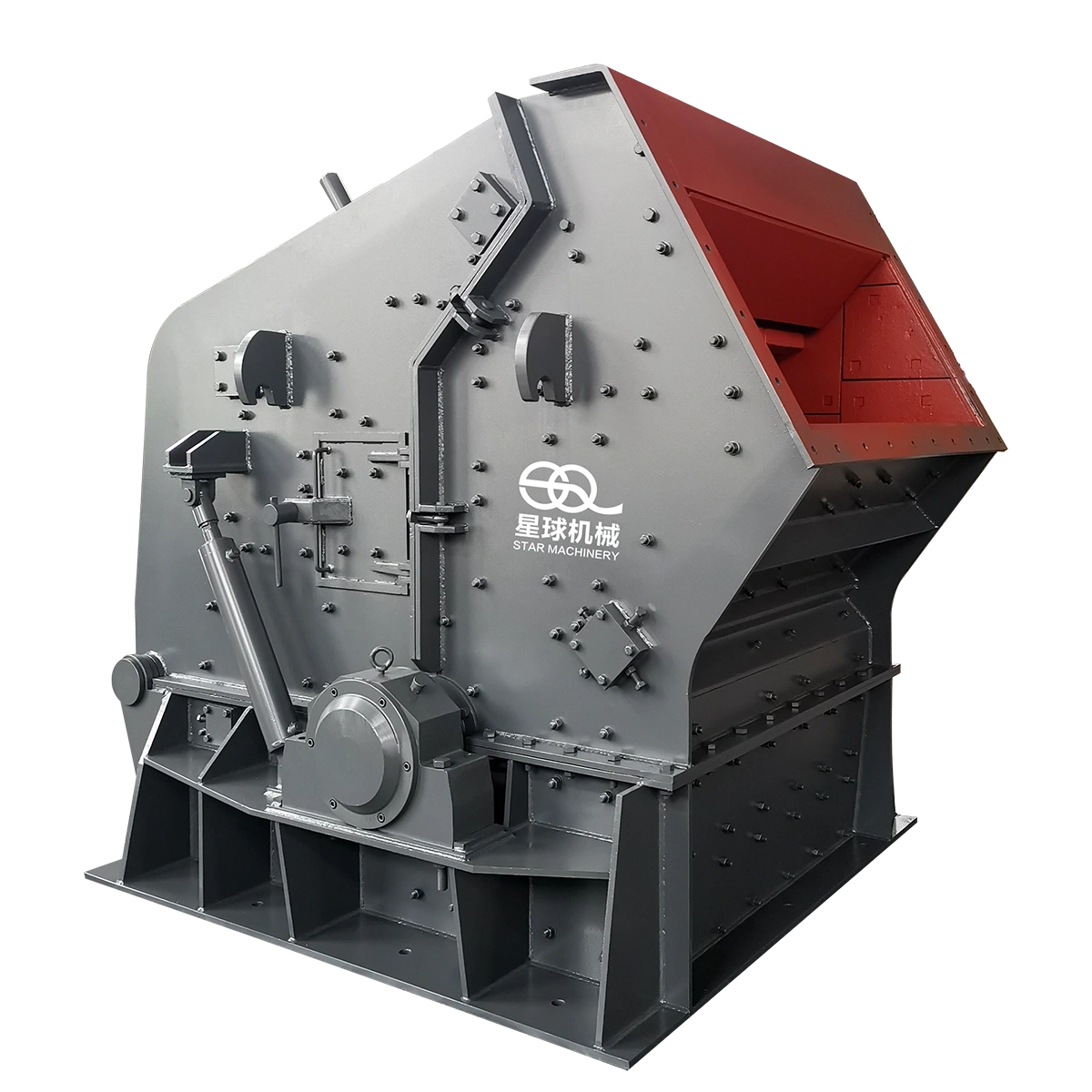
Impact crushers use a rotor, blow bars, and impact plates to break material at speed. They serve reduction or shaping duties. Abrasiveness, moisture, fines, and required particle form belong in the supplier discussion.
Hammer crushers apply repeated blows to selected friable or moderately hard material. Roll crushers control top size through the gap between the rolls. Vertical-shaft impact equipment uses high-speed impact for shaping and manufactured sand.
These machines need a clear feed and product basis.
| Machine type | Crushing action | Typical duty | Project check |
| Jaw | Compression | Primary, large feed | Opening, jaw plates, and access |
| Gyratory | Continuous compression | High-volume primary | Foundation, lifting, and capacity |
| Cone | Compression and rolling motion | Secondary or tertiary | Cavity, setting, and liner wear |
| Impact | High-speed impact | Reduction or shaping | Abrasiveness and particle shape |
| Hammer, roll, or VSI | Impact or gap control | Application-specific sizing | Moisture, friability, and wear |
Mining and quarry plants prepare ore and rock for screening, mineral processing, and grinding. Aggregate plants produce fractions for roads, bridges, concrete, rail, airports, and water projects.
Top size may define the product. Gradation or particle shape may define it instead.
Cement, metallurgical, and chemical plants reduce mineral feed before blending, heating, or separation. Recycling lines process concrete, brick, and pavement material. Construction-waste feed may carry steel, moisture, dust, and irregular pieces. The feeder, protection, and sorting plan change with that feed.
The model follows the duty. Give the supplier enough information to select the crusher and check the rest of the line against the same operating conditions.
Record the material name and maximum feed size. Add hardness, abrasiveness, moisture, clay or fines content, and possible tramp metal.
Feed variability matters too. A representative description or sample helps when the material changes across the deposit or waste stream.
These properties point to practical limits. Abrasive material wears liners and blow bars. Moisture and clay can bridge openings or blind screens. Tramp metal may require detection or protection.
State tonnes per hour, operating hours, target fractions, maximum product size, and the intended crushing stage. Include screening, washing, recirculation, or stockpiling where the process requires them. A capacity figure has meaning when its feed and product basis is written beside it.
The reduction ratio shows whether one stage can handle the duty or whether the load should be shared. This decision affects machine size, screen load, recirculation, and power.
Power supply, footprint, foundation, dust and noise controls, automation, climate, and maintenance clearance shape the layout. Wear-part storage and replacement access shape the operating plan. Installation, commissioning, training, and technical support complete the scope.
A compact site with restricted lifting or maintenance space may need a different machine arrangement from a larger fixed plant processing the same material at the same target output.
| Information to provide | Design consequence | Evidence to request |
| Material and feed properties | Selects action, chamber, and wear material | Material basis or test results |
| Feed size and target fractions | Sets opening, gap, screen, and stages | Flow sheet and capacity basis |
| Capacity and operating hours | Sizes machines, motors, and spares | Rated conditions and test scope |
| Site, power, and destination | Shapes foundation, packing, and service | Drawings, packing list, and support scope |
The equipment list and flow sheet should match the stated feed, capacity, and output. Drawings and test conditions show the basis. Wear-part materials, spares, and inspection records support review.
Production capability can cover casting, heat treatment, machining, assembly, and physical or chemical testing. The available quality inspection and testing information shows which records can be discussed during supplier review.
The commercial scope needs the same attention. Packing, delivery terms, foundation information, installation, commissioning, operator training, warranty, and post-warranty service should be assigned clearly. Published installation and technical support details provide a starting point for that conversation.
Jinhua Star Machinery & Steel Casting Co., Ltd. has manufactured mining machinery and wear-resistant steel castings since 1993. Its production includes casting, heat treatment, machining, assembly, and physical and chemical testing. The company serves customers in more than 100 countries and provides overseas technical support.
The crushing and screening product range covers equipment and wear components used across a complete line.
A project discussion can begin with the material, feed size, capacity, target fractions, site conditions, destination market, and service scope. Submit those details through the crushing machinery enquiry.
Crushing machinery applies compression, impact, attrition, or shear to reduce rock, ore, concrete, minerals, and other bulk feed to a controlled size and shape.
A feeder supplies material to the crusher. Screens separate finished fractions, and oversize returns for another pass or moves to a later stage. The crushing action depends on the machine type.
Common types include jaw, gyratory, cone, impact, hammer, roll, and vertical-shaft impact crushers. Feed condition, stage, capacity, and product specification determine the relevant type.
Crushing reduces coarse material to smaller pieces. Grinding uses finer contact and more energy to produce much smaller particles or powder.
Send the material, maximum feed size, hardness, abrasiveness, moisture, target fractions, tonnes per hour, operating hours, power supply, site conditions, destination market, and service requirements.