Nov 5, 2026
)
 admin
A crusher reduces rock or other feed material to a smaller product. The crusher type, chamber design, feed conditions, and discharge setting affect the resulting product size. Main components vary across jaw, cone, and impact crusher designs.
Knowing the crusher type, model, and component names helps with troubleshooting and spare-parts identification. Star Machinery’s published product range includes PE/PEX, JC, and EC jaw crushers; PY, PYF, and HC cone crushers; and PF impact crushers.
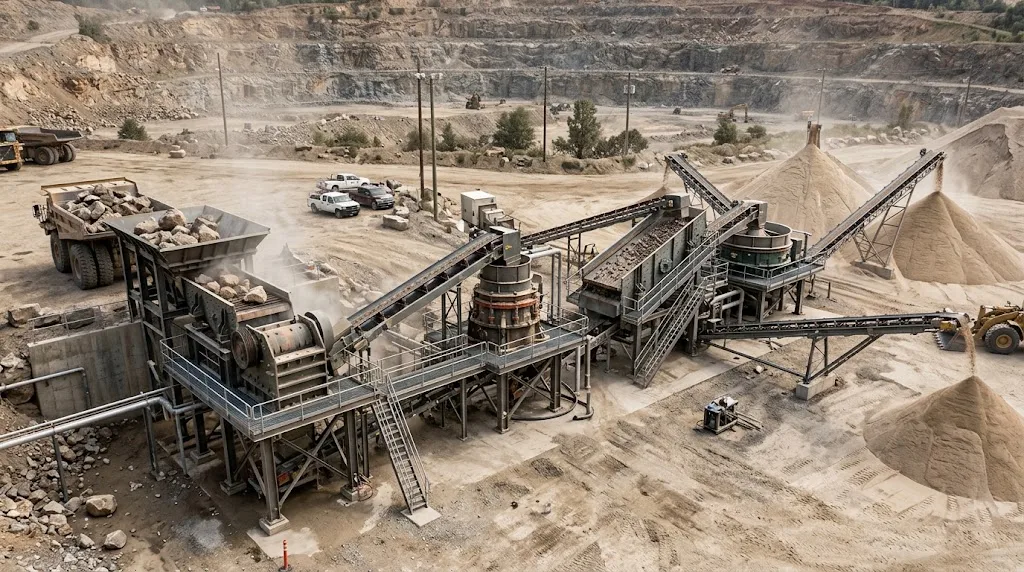
A crusher assembly commonly includes a frame, feed opening or hopper, crushing chamber, drive, and discharge opening or setting. Components vary by crusher type and model. Star Machinery’s published crusher range covers jaw, cone, and PF impact crushers.
The main frame supports the crusher’s working assemblies. Depending on the model, a feed hopper or chute directs material into the crushing chamber. A hopper liner may be fitted where specified; do not assume every hopper has the same lining.
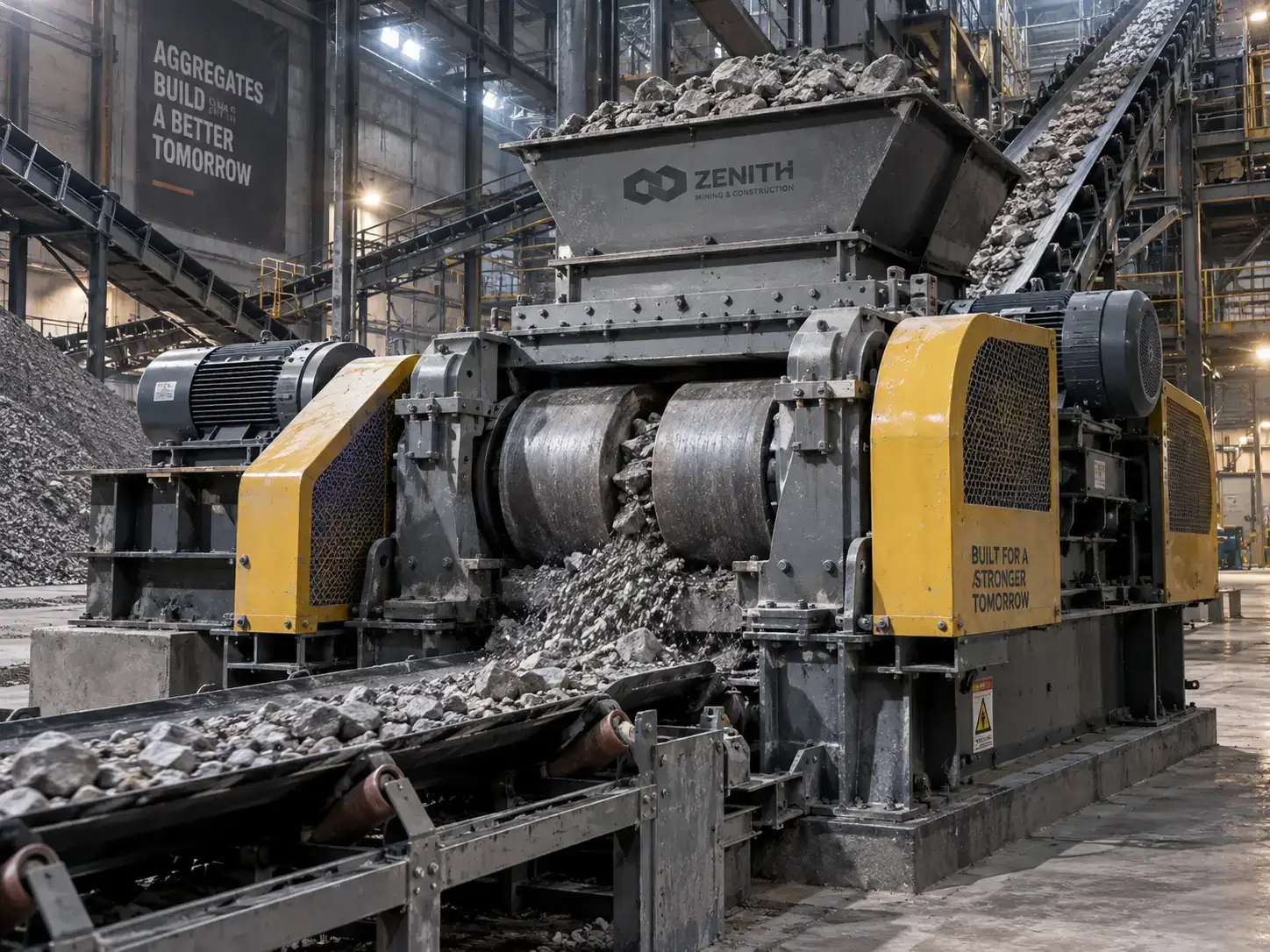
Inside the crushing chamber, the working surfaces act on the feed according to the crusher design. Jaw and cone crushers use compression; the PF impact crusher uses rotor-mounted plate hammers (also called blow bars) and counterattack/impact plates. The discharge opening or setting affects the product-size distribution, together with feed and operating conditions.
The drive arrangement depends on the model. Star Machinery’s PF impact crusher description specifies a motor, V-belt, rotor shaft, plate hammers, counterattack plates, and liners. Feeders, screens, and conveyors are separate plant equipment that may be used with a crusher.
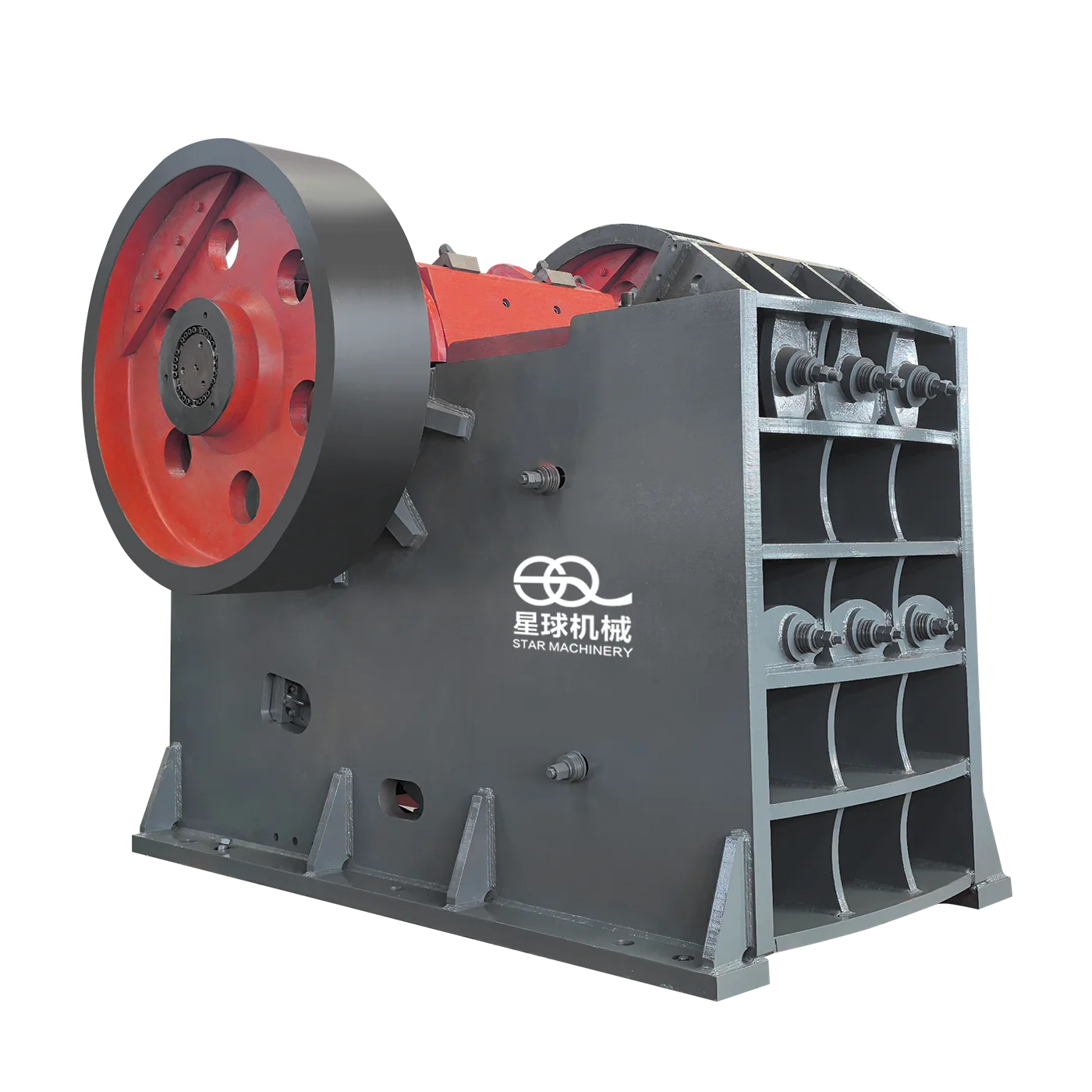
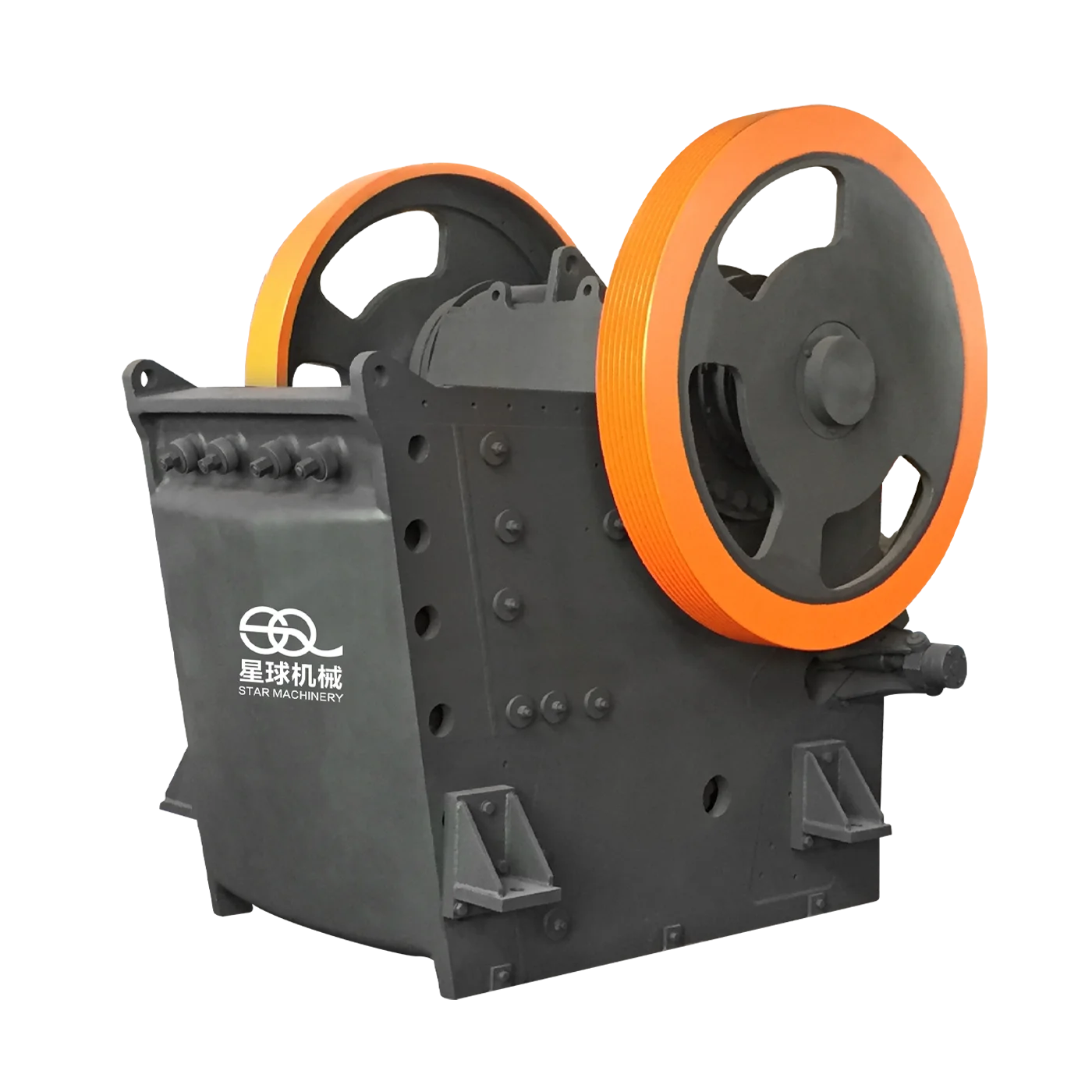
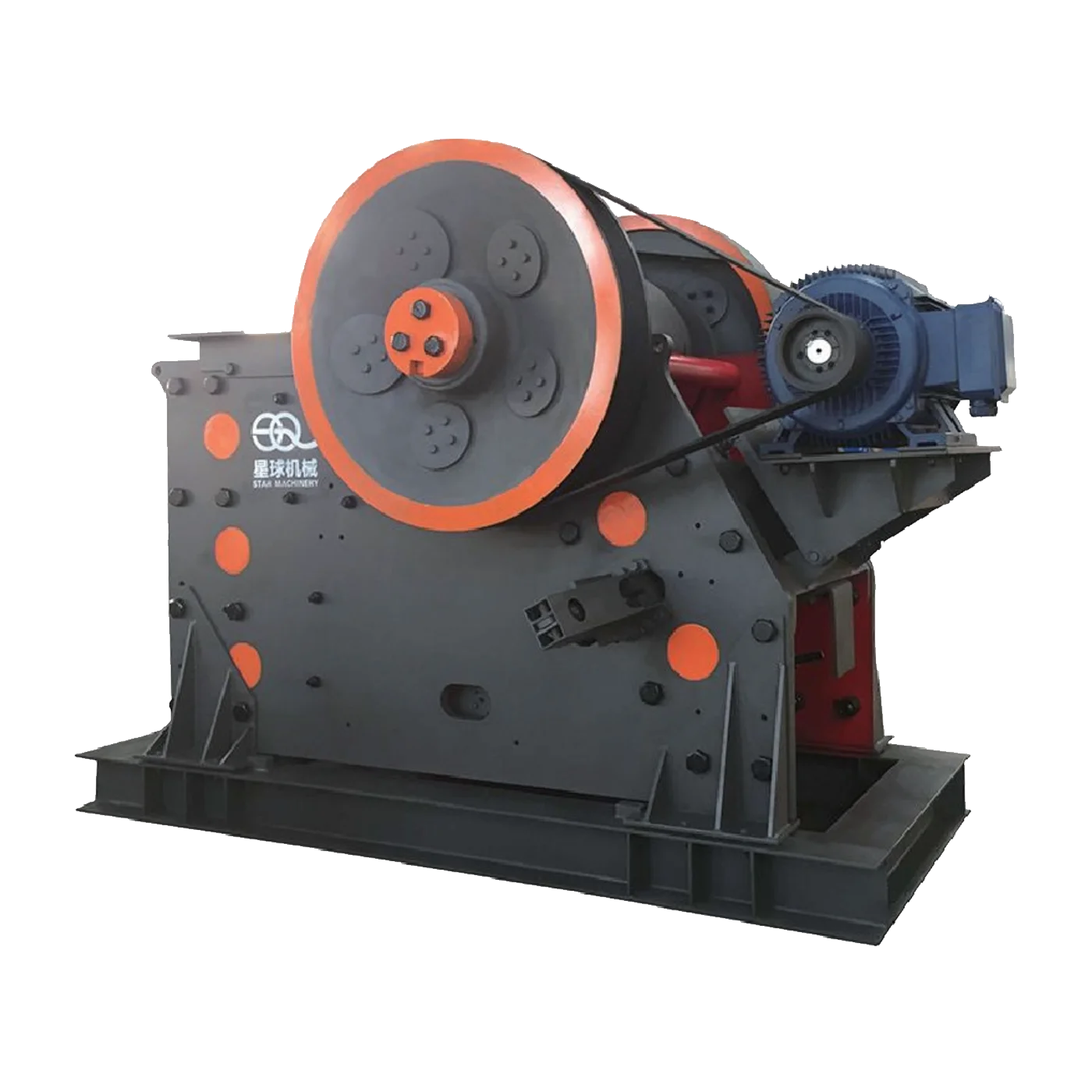
A jaw crusher reduces material by compressing it between a fixed jaw plate and a moving jaw plate. Star Machinery lists PE/PEX, JC, and EC jaw crusher series. Typical parts include fixed and moving jaw plates, side/cheek plates, toggle plate, eccentric shaft, moving jaw body (pitman), flywheel, bearings, and frame; exact parts vary by series and model.
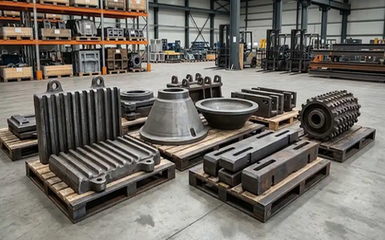
The jaw plates take a terrible beating every single day. Because of this, they are very common Crusher Spare Parts. Their bumpy shape changes how the machine bites the stone. Cheek plates bolt to the side walls to stop them from scraping away.
In common jaw-crusher designs, the eccentric shaft drives the moving jaw assembly. The toggle plate supports and transmits motion in the jaw mechanism; its exact role and arrangement vary by design. The flywheel helps smooth cyclic motion. Diagnose changes in output or vibration using the machine manual and inspect only under the specified shutdown and isolation procedure.
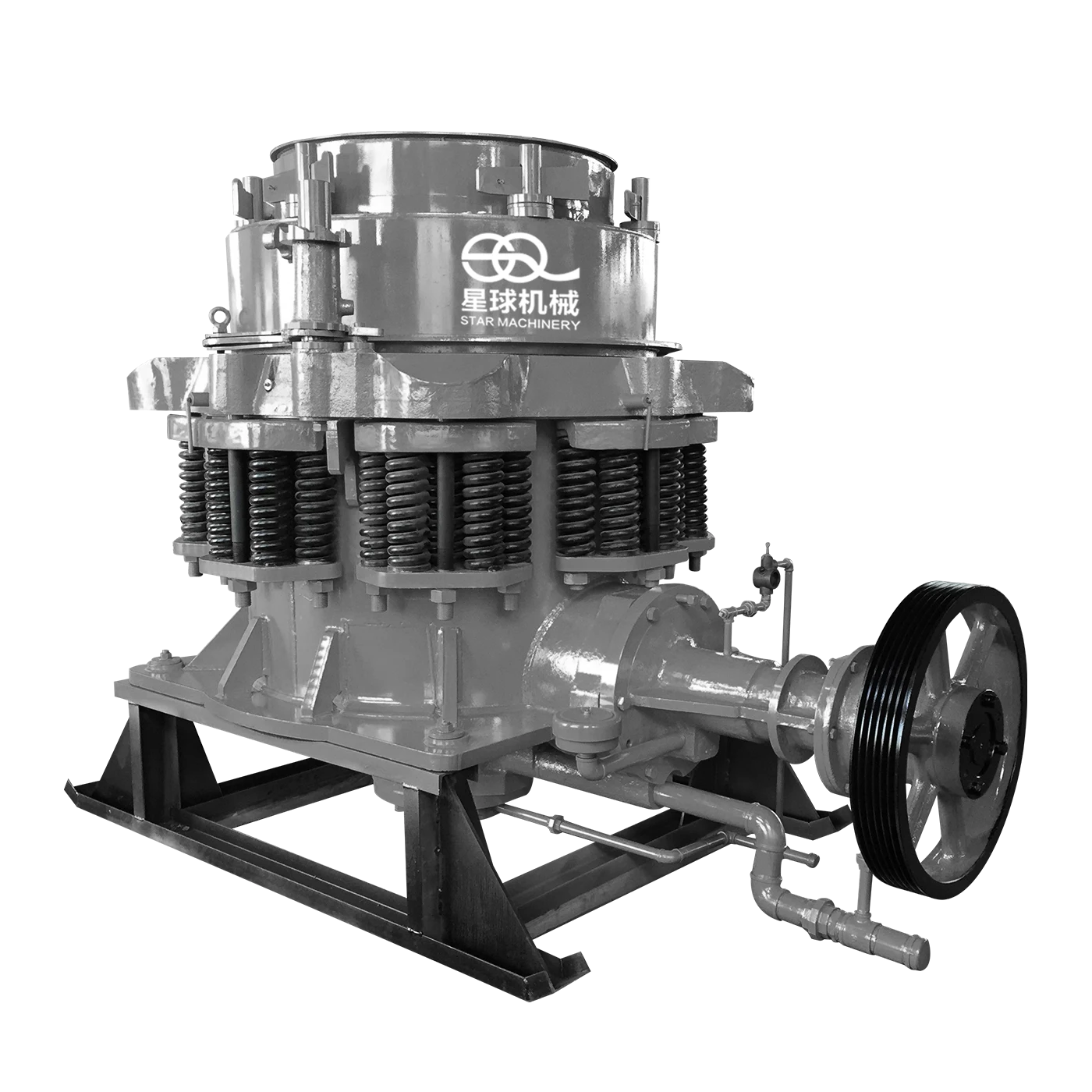
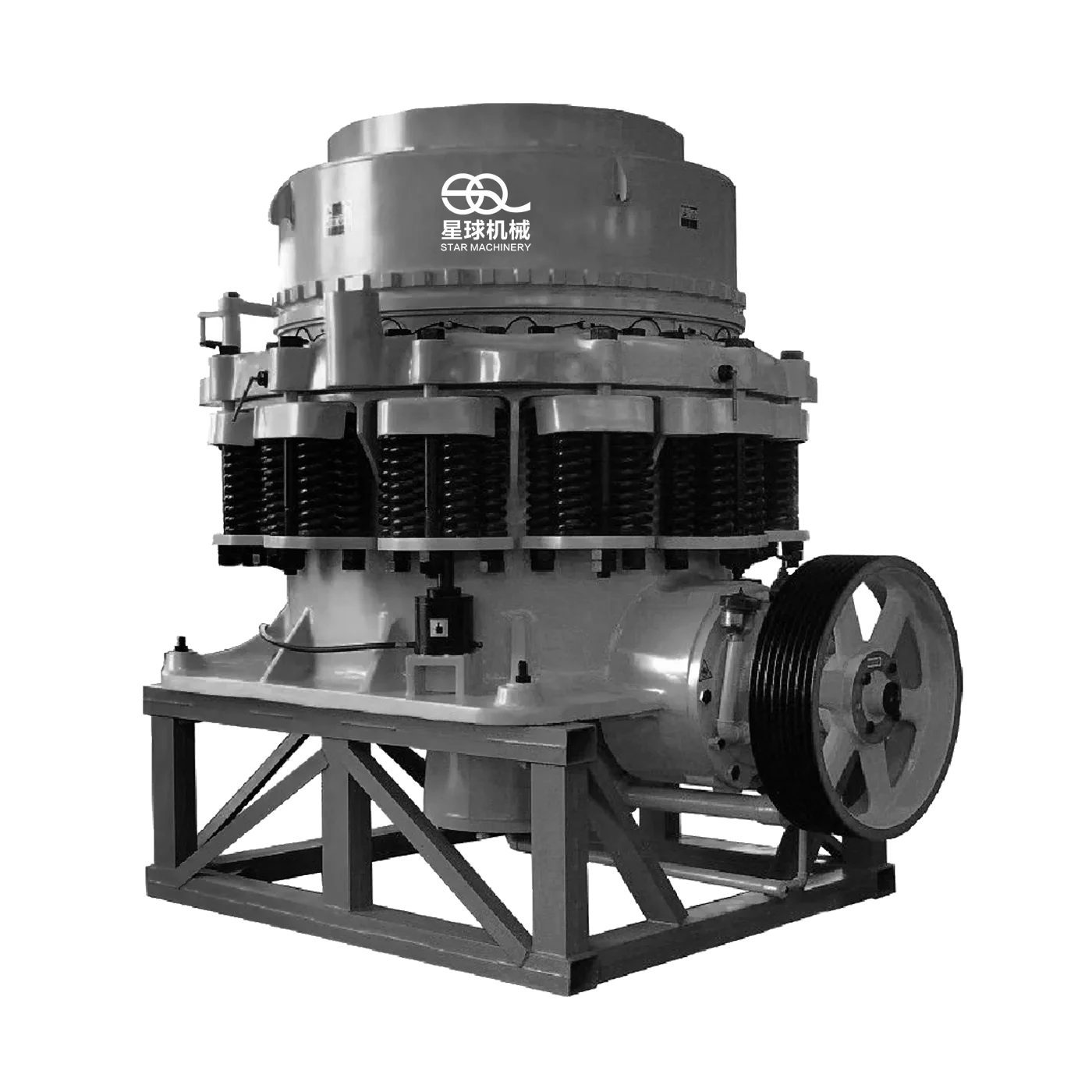
Star Machinery lists PY, PYF, and HC cone crusher series. A cone crusher compresses material between the moving cone’s mantle and the fixed concave (bowl liner). An eccentric assembly causes the moving cone to gyrate; it should not be described simply as a cone spinning like an impact rotor. Components and protection systems vary by model.
The mantle is the moving cone liner; the concave is the fixed bowl-shaped liner. Together they form the crushing chamber. Their profile and the crusher setting affect crushing performance and product size. Inspect wear and replace liners according to the model-specific manual and wear limits, rather than relying on a generic thickness rule.
The main shaft, eccentric assembly, and bearings are model-specific components. Lubrication requirements differ by crusher design; follow the manufacturer’s specified oil, flow, temperature, and maintenance limits. When ordering cone-crusher parts, confirm the series, model, chamber, part number, and required quantity.
These crushers smash stuff in totally different ways. So, you must check different wear parts.
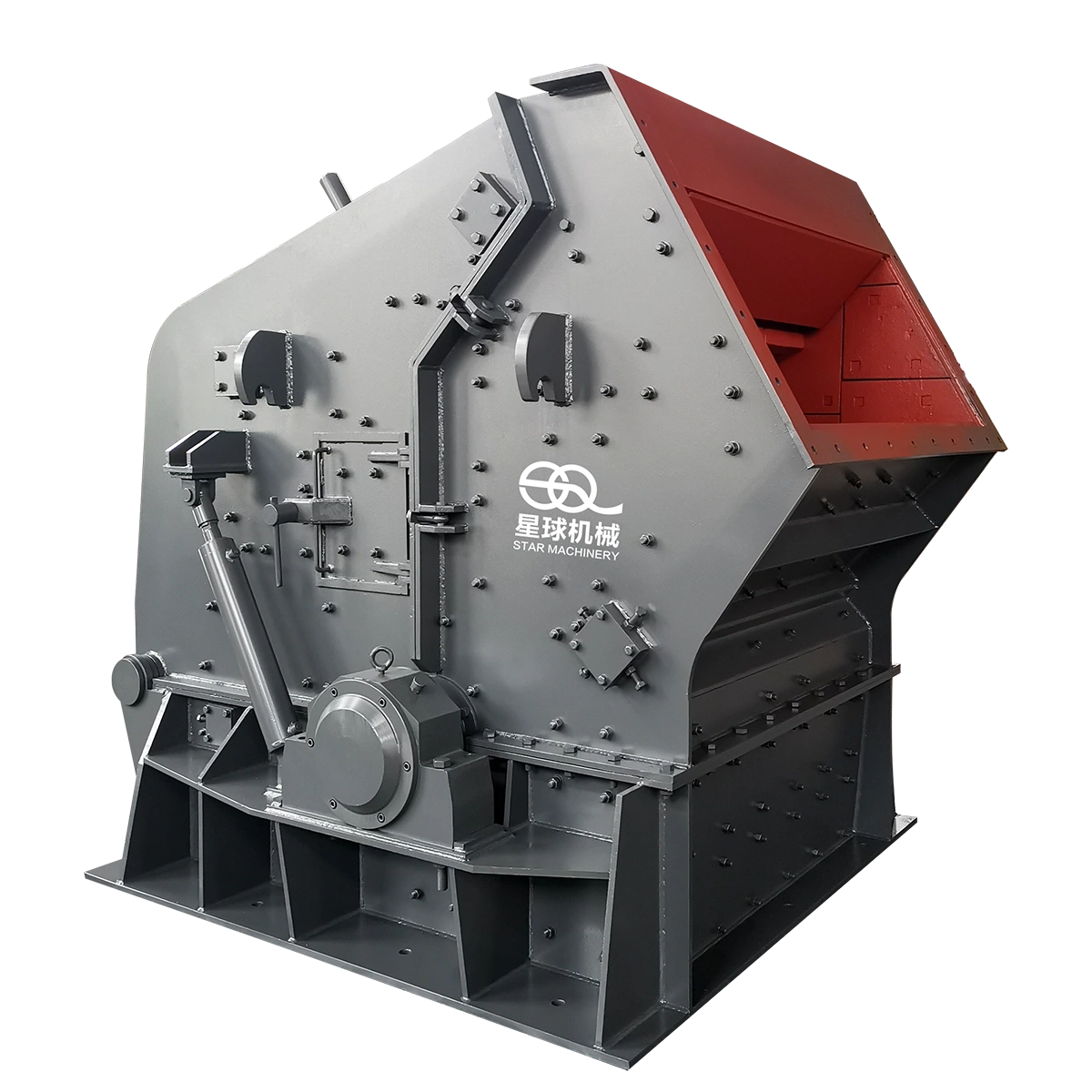
Star Machinery’s PF impact crusher description identifies a rotor, plate hammers (blow bars), counterattack plates, and cavity liners. The rotor-mounted hammers impact the feed and throw it against the counterattack surfaces. Component names and arrangements should be checked against the PF model documentation.
Inspect plate hammers, counterattack plates, and liners at the intervals and by the method specified in the PF crusher manual. Check for wear, damage, secure fastening, and abnormal rotor vibration only under the prescribed safety procedure. Replacement parts must match the crusher model and rotor configuration.
Star Machinery’s published crusher range covers jaw, cone, and PF impact crushers. Roll crushers are not identified in the product information reviewed for this article, so their components are outside this Star-specific guide.
For parts support, identify the crusher series, model, chamber, and part number from the machine nameplate and parts documentation.
Parts touching the raw stones wear out the fastest. But bearings, belts, and thick bolts break too. Overloading the hopper causes this. Dry grease also kills parts.
Common components to inspect, depending on crusher type and model:
Jaw crushers: jaw plates, side/cheek plates, and toggle plates (confirm the model-specific parts list).
Cone crushers: mantle and concave/bowl liner; confirm chamber and model.
PF impact crushers: plate hammers/blow bars, counterattack plates, and cavity liners.
Star Machinery’s listed range in this guide: jaw, cone, and PF impact crusher parts.
Screens, screen panels, springs, and clamps are screening-equipment parts, not necessarily crusher components.
Drive and support components: bearings, shafts, and belts where fitted; these are not all wear parts, and inspection intervals are model-specific.
Write things down in a notebook. Log the part numbers and the date you swapped them. Record the running hours. Two heavy steel parts can look identical in a photo. But one might have different bolt holes or softer metal. A bad guess will hurt your daily output.
First, know your machine details. Grab the type, model number, and serial number. Know the exact part location. Next, look at your rocks. Are they super hard? Are they wet or dusty? How big are they at the start? Sending clear photos to the seller helps a lot.
The application and crusher model matter. Match the part number, dimensions, mounting details, material specification, and chamber configuration to the manufacturer’s parts information. Star Machinery’s jaw-crusher page notes that parts from different PE/PEX, JC, and EC models are not necessarily interchangeable.
Compare shipping times and prices. A dirt-cheap part costs you a fortune if it snaps on day two. Think about how you will lift it. Heavy parts need cranes. Also, buy new bolts and rubber seals.
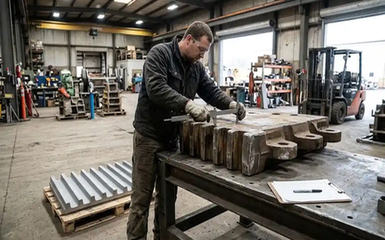
Before inspection, clearing, adjustment, or replacement, stop and isolate the crusher and apply the site’s lockout/tagout procedure. Inspect feed and discharge areas only after verifying the equipment is isolated and safe to access. Follow the machine manual for operating checks.
During operation, use installed indicators or suitable instruments from designated safe positions; never reach toward moving parts or open guards to feel a bearing. Before inspection, clearing, adjustment, or replacement, stop and isolate the equipment and apply the site lockout/tagout procedure. Follow the manual for any controlled test run after maintenance.
After installing a replacement component, verify fastening, guards, lubrication, and clearances against the model-specific manual. Any test run and return to feed should follow the manufacturer’s commissioning procedure and site safety rules.
Star Machinery’s published crusher pages identify PE/PEX, JC, and EC jaw crushers; PY, PYF, and HC cone crushers; and PF impact crushers. Its wear-parts information lists jaw plates, side protection plates, toggle plates, cone mantles and concaves, plate hammers, counterattack plates, and liners. Confirm the exact part against the machine model and official parts data.
Their team does a lot. They draw up plant layouts. They ship the gear. They bolt it together and train your guys. Their fix-it team gives great advice. When you call them, just tell them your crusher model. Tell them the rock type. Send some good photos.
The company describes equipment for crushing and screening production lines. Confirm the proposed feeder, crusher, screen, and conveyor configuration against the project requirements and the specific product data.
Q1: What is the most important part of a crusher machine? A: It depends on the crusher type and task. Jaw plates are key wear parts in a jaw crusher; the mantle and concave form the cone-crusher chamber; plate hammers and counterattack plates are key wear parts in a PF impact crusher.
Q2: What are crusher wear parts? A: Replaceable components exposed to crushing or abrasion, such as jaw plates, cone mantles and concaves, impact plate hammers, counterattack plates, and liners. Exact names vary by machine model.
Q3: How often should Crusher Spare Parts be replaced?
A: There is no magic number. It depends on your stone type. Hard, dusty rocks eat metal fast. Check the running hours. Measure the steel thickness yourself. Change them when the finished gravel starts looking bad.
Q4: Can spare parts be used across different crusher models?
A: Always double-check the model numbers and bolt holes. Just because two big parts look alike does not mean they fit. Using the wrong piece is dangerous.
Q5: What information is needed to order crusher spare parts?
A: Tell the shop the exact machine model and serial number. Give them the part name and how many you want. Tell them about your rock type and size. Share some clear pictures if you have them.