
Why Is Your Impact Crusher Returning Too Much Material?

An impact crusher can receive too much return material when its discharge gets coarser or when the screen sends finished-size particles back for another pass. Both problems can occur at once. Start with a sieve analysis of the return belt material. If most of the extra return is genuinely oversize, compare the crusher discharge and fresh feed with their normal gradations. If the return contains a growing share of particles that should pass the screen, check the screen first.

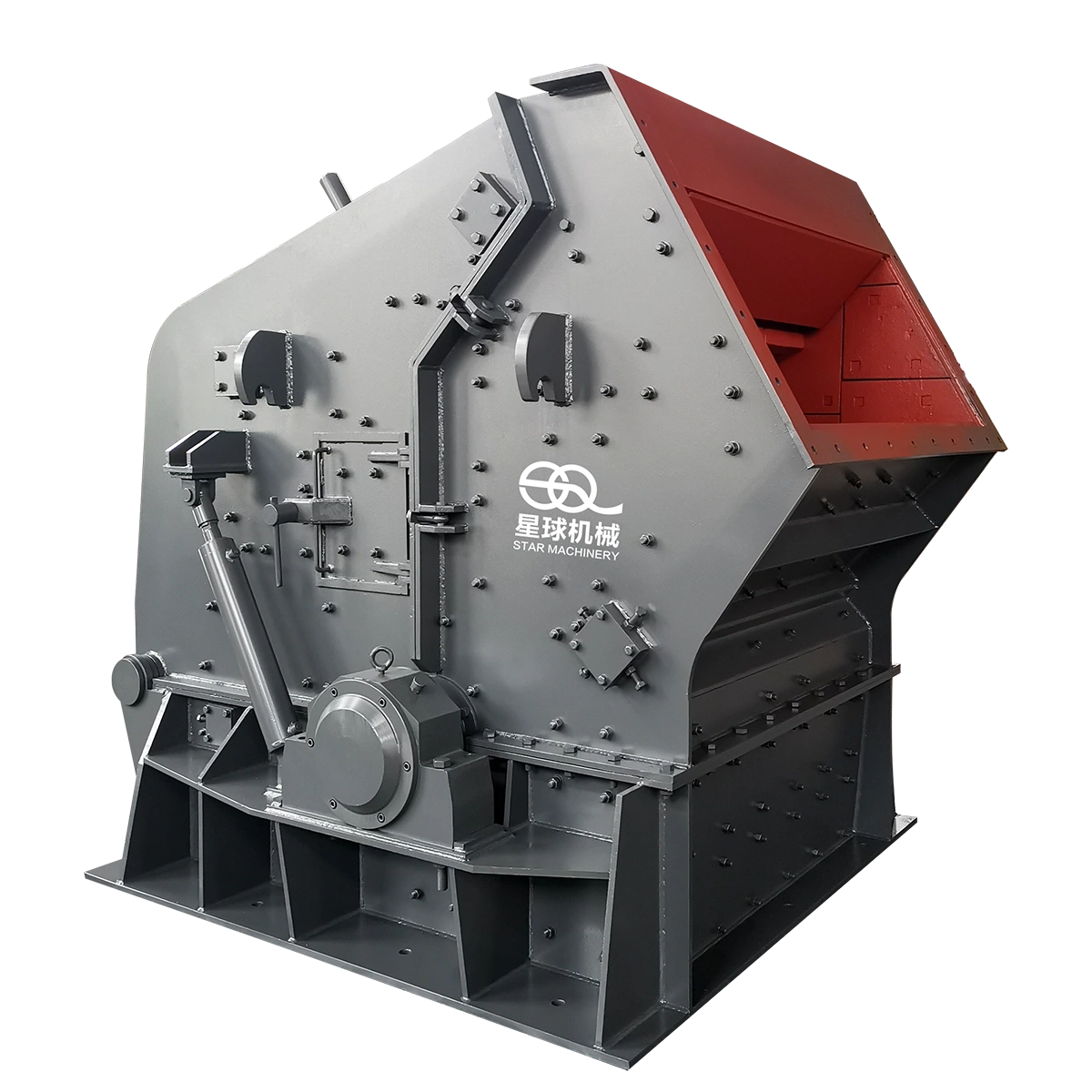
This guide covers closed circuits that use a horizontal-shaft impactor, such as the Star Machinery PF Impact Crusher, for secondary crushing after the primary crusher.
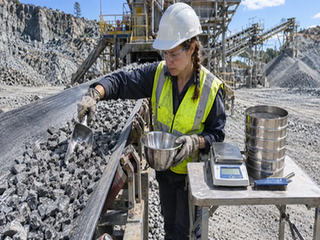
Engineer measuring the clearance gap between rotor blow bars and apron plates inside an open impact crusher.

What Counts as Too Much Return Material?

In a closed circuit, the screen separates the crusher discharge by size. Material that passes the relevant deck goes to the next stage or to a product stockpile. Oversize travels back to the crusher. Some return is part of normal operation. The return belt adds to the load from fresh feed, so a sustained rise in recirculation can consume capacity that would otherwise be available for new material. McLanahan’s guide to open and closed circuits

Track circulating load as return mass flow ÷ fresh feed mass flow × 100%, with both flows measured over the same stable operating period. Record the two flow rates alongside the percentage. A drop in fresh feed can raise the ratio even if the return belt carries the same tonnes per hour.

Compare the readings with a stable baseline for the same material, product size and circuit setup. Pay particular attention when return tonnes per hour rise while finished-product output drops or crusher load increases.

Sample the Return Belt Before Adjusting the Impact Crusher

Check How Much Return Material Is Already On Size

Use approved sampling points and collect representative samples during steady operation. Sieve the return sample at the intended separation size and record the mass in each fraction. Compare the result with a baseline sample if one is available. Multiplying the on-size mass fraction by the return flow rate estimates how many tonnes per hour of finished-size material are being sent back.

A high on-size fraction directs attention to screening. Look at the size distribution within that fraction as well. Particles just below the cut size can be harder to screen than much smaller particles. A large share of material well below the cut size warrants a close look at blocked openings, uneven loading or the installed screen media.

Compare the Return Sample With Crusher Discharge

Take a crusher discharge sample upstream of the screen during the same operating period. If discharge has become coarser and the return is mostly oversize, check what changed in crushing or feeding. If discharge gradation is steady but more on-size particles appear in the return, investigate the screen. When both trends appear, work through both parts of the circuit and measure each change separately.

When the Return Is Mostly Oversize

Check Blow Bar Wear and the Apron Gap

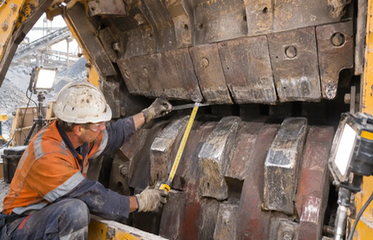
Gradual coarsening under similar feed conditions can point to worn blow bars, worn impact plates or a change in the effective apron gap. During an isolated shutdown, inspect wear across the rotor width and check the actual gap using the measurement procedure for the installed impact crusher. Compare it with the last setting that produced acceptable gradation and the limits in the machine manual. Consult the model documentation when selecting impact crusher wear parts.

A wider effective gap can allow coarser material to leave the crushing chamber. Closing the gap also changes the crusher’s operating conditions and may increase fines. Confirm the cause with the discharge sample before changing the setting.
screenshot_2026-11-13_18-13-50

Compare Feed Size, Feed Rate and Rock Properties

Check whether the primary crusher is sending larger lumps or a higher share of coarse material downstream. Review feeder trends for surges and compare the timing with peaks on the return belt. A change in rock source can also change how readily the feed breaks and how quickly wear parts lose their profile. Record feed size, rate and material source alongside the crusher discharge sample so the next comparison accounts for those changes.

When the Return Contains Too Much On-Size Material

Check for Screen Blinding and Pegging

Wet fines and clay can coat the screen surface and blind openings. Near-size stones can lodge in individual openings, a condition known as pegging. Both reduce the open area available for finished-size particles to pass. If excess return starts after rain or a change in the feed source, compare the on-size fraction in the return with the previous dry or stable run. Metso’s screen blinding case study

Check Deck Loading, Feed Distribution and Aperture Size

A deep bed or material concentrated on one side gives particles fewer opportunities to reach an opening. Check where the feed lands, how evenly it spreads across the deck and whether the problem worsens at higher throughput. If the increase followed a screen media change, verify the installed aperture against the intended cut size and check the finished product with a sieve analysis. Star Machinery vibrating screens

Verify the Change Under Stable Operating Conditions

Change one factor at a time where practical. Once the circuit stabilizes, recheck fresh feed rate, return rate, finished-product throughput and gradation. Use comparable feed and the same sampling points. A lower circulating load is useful when the circuit also maintains or improves compliant product output. Keep the readings as the baseline for the next change in feed, screen media or wear parts.
Tags:
avatar

admin

personal profile

Faq

One
Whole of her lower arm towards the viewer. Gregor then turned to look out the window at the dull weather. textile samples lay spread out on the tabl.

Two
Whole of her lower arm towards the viewer. Gregor then turned to look out the window at the dull weather. textile samples lay spread out on the tabl.

Three
Whole of her lower arm towards the viewer. Gregor then turned to look out the window at the dull weather. textile samples lay spread out on the tabl.

Products

PEPEX Jaw Crusher (2)

PE/PEX Jaw Crusher

The jaw crusher is used in the first process of crushing all kinds of ores and rocks. It can process various ores with a compressive strength of no more than 320MPa to medium particle size at one time. It often forms a complete set of sand and stone production lines with cone crushers, counter impact crushers, sand-making machines, etc., which are widely used in mines, metallurgy, chemical industry, building materials, electricity Power, water conservancy, transportation and other fields. PE series is used for coarse crushing operations, and PEX series is used for medium crushing or fine crushing operations to meet different crushing needs.
It is a kind of crushing equipment with simple structure and stable performance. With its efficient crushing ability, it has become one of the core equipment for material crushing in mines and various industrial fields.
JC series Jaw Crusher 001

JC Series Jaw Crusher

The birth of the new generation of jaw crusher JC is due to the accumulation of rich experience and the large adoption of computer simulation and CAD design. Compared with the old generation of jaw crushers, the JC crusher has increased its own strength and reduced the self-weight of the equipment. Its high yield and low cost make it the first choice of jaw crusher for the majority of users.
The JC jaw crusher is designed using modern CAD technology, and all models are analysed by finite element technology to ensure that the internal stress level is within the appropriate range, which ultimately makes the JC crusher have the characteristics of high structural strength and light equipment weight.
It strengthens its own strength and reduces the self-weight of the equipment. It has the advantages of high yield, low cost, high structural strength and light equipment weight.
EC series Jaw Crusher (1)

EC Series Jaw Crusher

Star Machinery EC series jaw crusher is developed and designed based on crushing various hard rock conditions. It adopts an innovative modular and welding-free frame structure, thus giving the equipment excellent fatigue resistance, reliability and multiple installation methods. Thanks to the precise and balanced overall structure, the EC series jaw crusher is economical and easy to install. With the use of special high-quality cast steel components and durable wear parts, it is given excellent applicability, outstanding economy and low operating costs.
Based on the development and design of various hard rock conditions, it adopts an innovative modular and non-welded frame structure, which has the advantages of economical and simple installation.
PF-Impact-Crusher-1-1

PF Impact Crusher

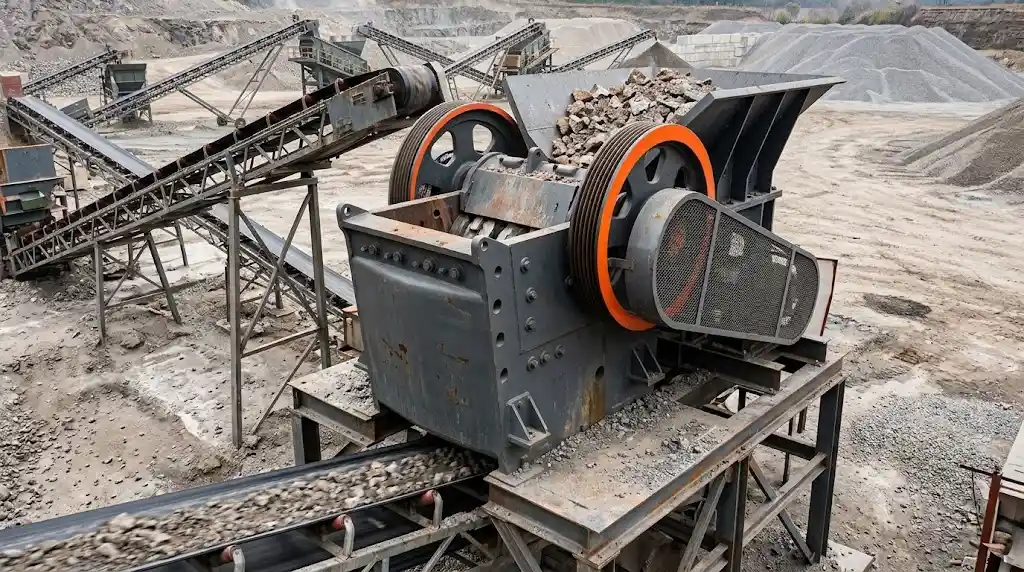
The impact crusher is configured in the middle crushing after the coarse crusher, which can crush ores and rocks with a compressive strength of no more than 360 mPa, with the characteristics of large processing capacity and fine discharge. The crushed product is cubic, with low needle-like content and no internal cracks. It is the first choice equipment for the production of high-quality stone in high-grade highways, water conservancy, airports, construction and other industries.
It is used for coarse crushing and medium crushing. It can process pressure-resistant ≤360 megapascal ore rocks. The processing volume is large, the discharge is fine, and the finished product is cubic, which is suitable for high-quality stone production in highways, water conservancy and other industries.
PY-Cone-Crusher-001-1

PY Cone Crusher

This series of crushers is used to crush all kinds of ores and rocks of medium hardness or higher. It has the characteristics of reliable structure, high production efficiency, convenient adjustment and economy. Its spring insurance system is an overload protection device that can make the foreign iron block pass through the crushing cavity without harming the machine. It adopts two sealing forms of dry oil or water to isolate the stone powder from the lubricating oil and ensure reliable operation. The form of the crushing cavity is determined by the purpose of the ore. The standard type is suitable for medium crushing, medium-sized, and the short-head type is suitable for fine crushing.
It has the advantages of high production efficiency, low energy consumption, uniform particle size of finished products, extended service life and so on.
PYF Cone Crusher 001

PYF Cone Crusher

It is mainly used in the secondary and tertiary crushing links of the production line. It has a wide range of applications and can be used in industries such as metallurgy, building materials, road construction, chemical industry and so on. It can easily crush all kinds of ores and rocks of medium hardness and above, without worrying about the problem that the hardness of the material is not suitable enough. This equipment is divided into two models. The standard type is mainly used for coarse and medium crushing operations, and the short-head type is suitable for medium crushing and fine crushing.
It is usually used in secondary crushing and tertiary crushing. It is suitable for crushing all kinds of ores and rocks of medium and above hardness.
contact

Contact us

    Products
    Contacts
    WhatsApp
    Email